Showing posts with label Banded Stilt. Show all posts

Friday, 6 March 2020

Stilts, Plovers, Coots and a lot of rain

I was fortunate to spend the day at a Birdlife Australia / Barwon Estuary Project workshop on shorebirds today.

The morning was spent with presentations from Birdlife Australia ornithologists on the life-cycles and environmental challenges faced by both migratory shorebirds (those that breed outside Australia and travel here in their non-breeding season) and indigenous shorebirds (those that breed, feed and generally hang around permanently within Australia - although several species migrate around Australia depending on weather conditions), and sessions on hints to ID shorebirds.

We spent the afternoon (or as much of it as we could bear given the persistent rain) at Lake Victoria in Point Lonsdale.

I arrived a little early so spent a few minutes photographing a pair of Eurasian Coots on the delightfully named 'Emily's Pond' nearby.


Eurasian Coot, Emily's Pond, Point Lonsdale, Victoria
Panasonic Lumix G9 with Lumix-Leica 100-400mm f/4.5-6.3 lens @ 400mm
ISO 400, 1/1250 second @ f/6.3

Once everyone had arrived we walked through the salt marsh to a viewpoint across one of the small lakes adjacent to Lake Victoria where we suspected there would be Avocets and Stilts. Despite the gloomy and 'damp' conditions, we were not disappointed as there were several small flocks of Red-necked Avocets in the middle of the shallow lake

Avocet, Lake Victoria, Point Lonsdale, Victoria
Panasonic Lumix G9 with Lumix-Leica 100-400mm f/4.5-6.3 lens @ 400mm
ISO 400, 1/1000 second @ f/6.3

and a large flock of Banded Stilts sheltering beside a small island in the lake.

Banded Stilt, Lake Victoria, Point Lonsdale, Victoria
Panasonic Lumix G9 with Lumix-Leica 100-400mm f/4.5-6.3 lens @ 137mm
ISO 400, 1/1600 second @ f/4.5

Several smaller groups of Stilts took off giving us fleeting glimpses of them in flight

Banded Stilt, Lake Victoria, Point Lonsdale, Victoria
Panasonic Lumix G9 with Lumix-Leica 100-400mm f/4.5-6.3 lens @ 400mm
ISO 400, 1/1600 second @ f/6.3

before landing on the small ponds on the shore of Lake Victoria proper, giving us a closer view of these beautiful birds, many of which were in breeding plumage displaying their brown chest band.

Banded Stilt, Lake Victoria, Point Lonsdale, Victoria
Panasonic Lumix G9 with Lumix-Leica 100-400mm f/4.5-6.3 lens @ 400mm
ISO 800, 1/4000 second @ f/6.3

Banded Stilt, Lake Victoria, Point Lonsdale, Victoria
Panasonic Lumix G9 with Lumix-Leica 100-400mm f/4.5-6.3 lens @ 400mm
ISO 400, 1/2000 second @ f/6.3
 There were a few (unphotographable) Red-necked Stints doing their sewing-machine impersonations feeding on the sand banks and a flock of Red-capped Plovers sheltering amongst the Bearded Glasswort on one of the small, semi-inundated islands.

Red-capped Plover, Lake Victoria, Point Lonsdale, Victoria
Panasonic Lumix G9 with Lumix-Leica 100-400mm f/4.5-6.3 lens @ 400mm
ISO 400, 1/1250 second @ f/6.3

So, not a great day photographically but it's always great to see Avocets and Banded Stilts, both of which migrate around Australia chasing the wet so we don't always get to see them.

Saturday, 18 May 2013

Birds of the Thousandth Day

Today marks 1000 days since I started this blog so I was keen to add something special. Fortunately, the day had already been booked for a trip to the Western Treatment Plant with the Melbourne Photography Group from BirdLife Australia, always a great bunch of people with whom to spend a day in the field.

The weather forecast was for a cool and windy day with a light showers, which turned out to be accurate, but this didn't deter our intrepid bunch. We started at Paradise Road ponds as there have been recent reports of a Northern Shoveler sighted here. The Northern Shoveler is a northern hemisphere bird that migrates to Africa, India and SE Asia during the northern winter. Occasionally a few birds seem to miss the off ramp and end up in southern Australia. With no sign of the Northern Shoveler, we moved to Walsh's Lagoon. There were plenty of birds present including several species of raptor, large flocks of Australian Pelican, Pink-eared Duck, Red-necked Avocet, two species of stilts and a lot of Australian Shovelers but no Northern Shoveler so we drove on to the Borrow Pits for lunch. This proved fruitful for photographing avocets and stilts that were close to shore and seemed unperturbed by the many photographers pointing lenses at them. I was happy to be able to capture all three species in one image:

Red-necked Avocet, Banded Stilt, Black-winged Stilt, Western Treatment Plant

as well as a solo Banded Stilt in flight

Banded Stilt, Western Treatment Plant

and I finally managed to photograph a Spotted Harrier! I have been chasing this species at the WTP for a long time now and never managed to catch one close enough for a photograph. This one is not the greatest but happy to finally record it on camera.

Spotted Harrier, Western Treatment Plant

Just as we were settling in for a longer shoot here, we got the call that the Northern Shoveler had been spotted back at Paradise Road ponds, so we saddled up and headed back there. As could be expected, the bird was in the middle of the large pond so could only be seen at a long distance but I did manage to get a record shot (albeit a very tight crop at long distance) for a positive ID on this male bird.

Northern Shoveler (male) with Australian Shoveler (male), Western Treatment Plant

While back at Paradise Road, I also managed to get a shot of a small flock of Pink-eared Ducks (which were in greater numbers at the plant than I've seen before).

Pink-eared Duck, Western Treatment Plant

While there, a large bird of prey flew overhead disturbing the flock of Red-necked Avocets and Banded Stilts:

Red-necked Avocet, Banded Stilt, Western Treatment Plant

Last stop was the Lake Borrie outlet where the incoming tide made it easy to capture the Red-necked Stints feeding on the mudflats.

Red-necked Stint, Western Treatment Plant

Other birds were also making the most of the feeding opportunities in the outlet creek

Hoary-headed Grebe, Western Treatment Plant
Australian Spotted Crake, Western Treatment Plant

So, very happy to celebrate the 1000th day with a lifetime tick with the Northern Shoveler and add Spotted Harrier as the 200th Australian bird species on this blog :-)

Sunday, 26 August 2012

More at the WTP


Following the Pratincole encounter and the Glossy Ibis, I headed further along the beach track to the Lake Borrie outlet where I found a pair of Cape Barren Geese at the location at which I photographed (what I presume is) the same pair 18 months ago. The larger bird posed nicely for a portrait shot


before charging its mate...


but a bit of butt sniffing...


and it all ended happily

Cape Barren Goose, Western Treatment Plant

under the watchful eye of this Nankeen Kestrel.

Nankeen Kestrel, Lake Borrie Outlet, Western Treatment Plant

It was high tide by the time I got to the bird hide so there was not a lot of activity there but I did manage to get a good view of some pelicans flying over the bay against dark clouds but lit by a bit of sunlight that broke through the overcast behind me.

Australian Pelican, Western Treatment Plant

One last stop at Paradise Ponds on the way out yielded a close-up of a lone Yellow-billed Spoonbill

Yellow-billed Spoonbill, Western Treatment Plant

and a large mixed flock of Red-necked Avocets and Banded Stilts, mostly feeding in the shallow water

Red-necked Avocet, Western Treatment Plant
Banded Stilt, Western Treatment Plant

but some roosting on the mudflats on the northern side of the pond.

Red-necked Avocet + Banded Stilt, Western Treatment Plant

Wednesday, 7 March 2012

Lake Victoria, Pt Lonsdale

I went for a walk at Lake Victoria in Pt Lonsdale (see map) this evening. Immediately on arrival at the car park I could see a few Banded Stilts feeding close to the shore but once I got through the gate and closer to the lake shore, I was confronted with a flock of 400+ among Silver Gulls and Red-necked Stints.

Silver Gulls and Banded Stilts, Lake Victoria
Red-necked Stints and Banded Stilts, Lake Victoria

They were so intent on feeding that they allowed me to get fairly close.

Banded Stilt, Lake Victoria
Red-necked Stint, Lake Victoria

There were also 3 Common Greenshank nearby but they are usually quite skittish so I didn't try and approach them too closely. Unfortunately, they were almost completely backlit but there was no way of getting around behind them without wading out into the lake and scaring off the Stilts and Stints.

Common Greenshank, Lake Victoria

The highlight of the evening, however, was the smallest plover chick I have seen. This Red-capped Plover can't be much more than a few days old.

Red-capped Plover, Lake Victoria

While I was watching the plover and chick, a flock of Black-winged Stilts flew in over me onto the pond beside the golf course.

Black-winged Stilt, Lake Victoria
About 20 Yellow-tailed Black-Cockatoos were screeching from the tops of the cypress trees on the golf course and while I was walking back along the track to the car park, they flew past me giving me time for one shot.

Yellow-tailed Black-Cockatoo, Lake Victoria

Saturday, 3 March 2012

Waders at Western Treatment Plant

I spent the day at the Western Treatment Plant on a Migratory Waders ID course. The weather was dismal with overcast skies, rain and a strong easterly wind making photography difficult but it was a great day out with a fun bunch of people. Thanks John for once again sharing your knowledge, wisdom and sense of humour.

There are still lots of Banded Stilts and these were close enough to get a reasonable shot even though it was so dark that this was shot at 60th of a second with aperture wide open

Banded Stilt, Western Treatment Plant

and, of course, the ubiquitous Red-necked Stints are always fun to watch and photograph.

Red-necked Stint, Western Treatment Plant

but the highlight of the day was a Broad-billed Sandpiper

Broad-billed Sandpiper, Western Treatment Plant

Saturday, 31 December 2011

WTP - last time for the year

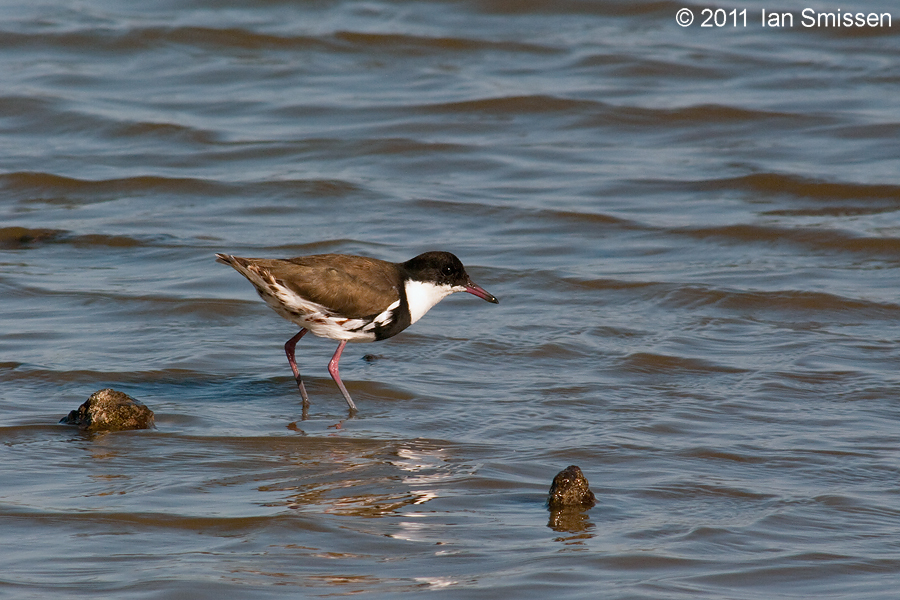
One last trip to the Western Treatment Plant for 2011. A Terek Sandpiper had been reported here yesterday so I thought I'd spend a late afternoon looking for it. Didn't manage to find it but did see a lot of other birds, some of which cooperated for a few photographs:

Banded Stilt, Western Treatment Plant
Sharp-tailed Sandpiper, Western Treatment Plant
Whiskered Tern, Western Treatment Plant
Pink-eared Duck, Western Treatment Plant
Black-winged Stilt, Western Treatment Plant
Red-kneed Dotterel, Western Treatment Plant

Birding and Natural History Blogs - Australia

Birding Blogs - Worldwide