Showing posts with label New Holland Honeyeater. Show all posts

Saturday, 7 June 2014

A Long Weekend in SW Victoria: Part 1. Cape Nelson

My wife and I headed for Cape Bridgewater for a relaxing long weekend away from the holiday hustle and bustle of home.

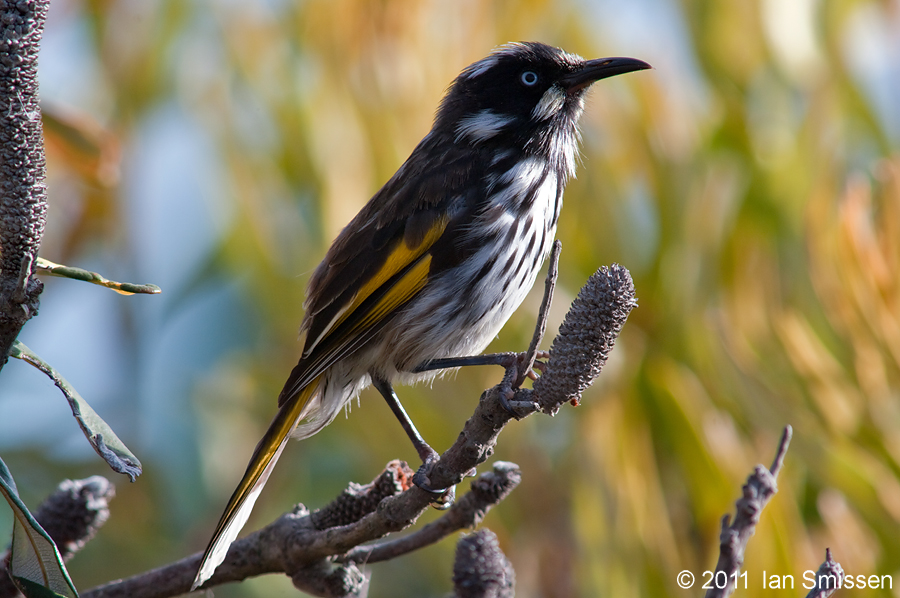
On the way we stopped at Cape Nelson lighthouse to check out the seabirds but before we even got to the lookout, this New Holland Honeyeater landed on a bush right next to the track.

New Holland Honeyeater, Cape Nelson
We managed to find Black-browed Albatross and Shy Albatross but they were a long way out to sea.

Black-browed Albatross, Cape Nelson
Shy Albatross, Cape Nelson

However, there was very little else other than the usual Silver Gulls and Australasian Gannets and even these were not close enough to shore to photograph.

The stop was made worthwhile by the repeated flyover of a Peregrine Falcon as it flew out to sea on four occasions over a period of about half an hour. I've seen Peregrines hunting around sea cliffs before but never seen them travelling so far out to sea. It was particularly difficult to photograph with a pale grey sky and low light but a bit of magic in Lightroom allowed the bird to be recognisable.

Peregrine Falcon, Cape Nelson

The rest of the weekend:
Part 2. Sunrise at Bridgewater Bay
Part 3. Lower Glenelg National Park
Part 4. Shore Birds

Saturday, 16 November 2013

Lorikeets go to University

Visiting Deakin University's Waurn Ponds (Geelong) campus last week, I couldn't help but notice the high-pitched chattering of a flock of small lorikeets in the the car park. I was without camera so could not capture the activity but I made sure to have the camera in the car this morning and made a brief detour on the way through Geelong to see if they were still there...

…and they were. At least twenty Purple-crowned Lorikeets were feeding among the eucalypts in the car park. Like most parrots, they are extremely affectionate birds.

Purple-crowned Lorikeet, Waurn Ponds

It was impossible to count and difficult to photograph them because they were rarely still and most often sitting or feeding in the tops of the trees and among the dense foliage.

Purple-crowned Lorikeet, Waurn Ponds

Occasionally one or two would come out to provide a better view.

Purple-crowned Lorikeet, Waurn Ponds

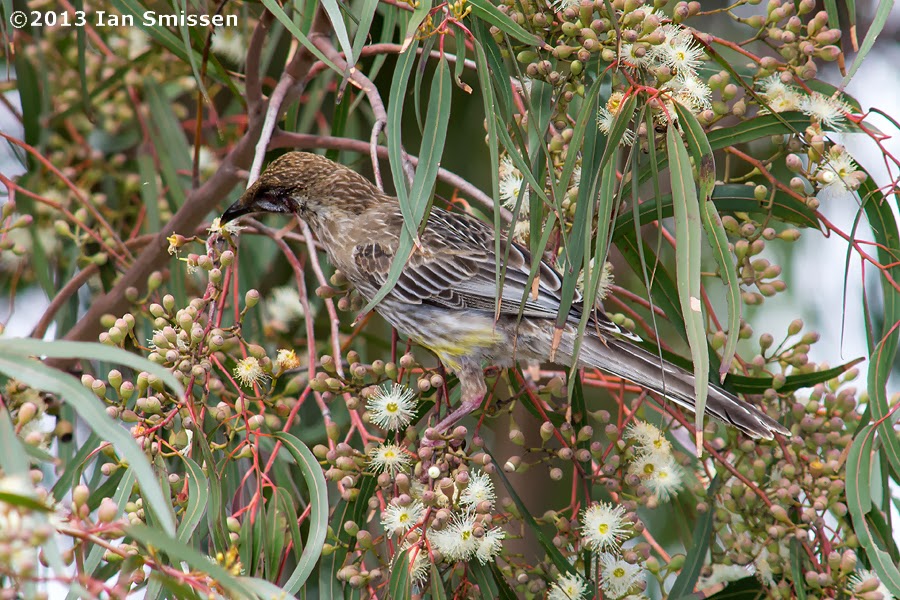
The resident Red Wattlebirds were persistently and aggressively defending their territory, taking the odd moment to grab feed of their own
Red Wattlebird, Waurn Ponds

and even squabbling among themselves.

Red Wattlebird, Waurn Ponds

Also feasting on the flowers were several Rainbow Lorikeets,

Rainbow Lorikeet, Waurn Ponds

In this one, the bird took off just as I hit the shutter.

Rainbow Lorikeet, Waurn Ponds

They are seriously quick because the next frame is completely empty (@7fps). I also like this shot because it shows the difference between the take-off techniques of parrots from passerines. Shots I've taken of small passerines show they jump into the air before opening their wings, where this bird is clearly still holding onto the branch while it's wings appear to be in full flight.

Rainbow Lorikeet, Waurn Ponds

The other common residents, New Holland Honeyeaters, hung around, unusually quiet…probably happy to not be the the primary focus of the wattlebirds.

New Holland Honeyeater, Waurn Ponds

Saturday, 21 April 2012

You Yangs

You Yangs Regional Park (see map) is one of my favourite places for bushland birding within easy reach (less than an hour's drive) from home. I visited there late in the afternoon and managed to find a few birds of prey cruising overhead. As I got out of the car at one of my usual stops on the eastern side of the park, I noticed this Wedge-tailed Eagle flying low over adjacent farmland


Wedge-tailed Eagle, You Yangs

and land in a dead tree in the middle of a paddock.

Wedge-tailed Eagle, You Yangs

A Little Eagle was also flying high overhead allowing reasonable views from the visitor centre

Little Eagle, You Yangs

although this Dusky Woodswallow was less impressed (and fighting several classes out of its weight division)

Dusky Woodswallow and Little Eagle, YouYangs

The area behind the visitor centre is usually good spot for robins, honeyeaters and parrots. There was not a lot of activity there this afternoon despite the eucalypts being in flower but the ever present New Holland Honeyeaters were in full force

New Holland Honeyeater, You Yangs

and, if you stand or sit still long enough, other birds will get quite close

Eastern Yellow Robin, You Yangs

Jacky Winter, You Yangs

The two photographs of the Jacky Winter are of the same bird taken less than a minute apart. It's amazing how different birds can look in different lighting.

Thursday, 29 December 2011

Backyard birds

I spent most of the day re-nailing the boards on the back deck and oiling the garden furniture...back-breaking work but I was rewarded with seeing 20 species of birds while I was occupied with drill, hammer and brush (and intermittent trips to the lounge-room for cricket updates). As evening fell a pair of Yellow-tailed Black-Cockatoos landed in a neighbour's cypress tree so I grabbed the camera for a few shots from our back deck.

Yellow-tailed Black-Cockatoo, Ocean Grove

Our backyard resident family of New Holland Honeyeaters was not deterred by my presence, in fact I really had too much lens as I had to step backwards to fit the birds in the frame.

New Holland Honeyeater, Ocean Grove

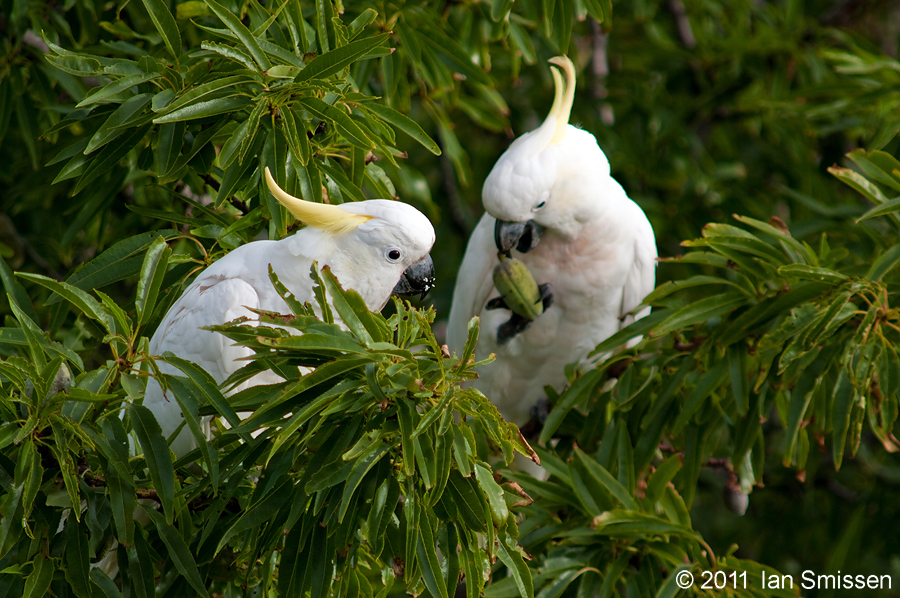
Just as I was about to pack up, a pair of Sulphur-crested Cockatoos arrived and proceeded to demolish a fair proportion of the neighbour's unripe almonds

Sulphur-crested Cockatoo, Ocean Grove

Thursday, 1 September 2011

First day of Spring

Bogged down in the office for most of the day but by early evening decided that enough was too much and took a wander down to the back of the sand dunes at the Buckley Park Foreshore Reserve (see map) as the sun was dropping into the western horizon. In one area a lot of revegetation work was done a few years ago, which has resulted in greater plant diversity and more open space making it a haven for some of the local bush birds.

Only there for twenty minutes before the light started to fade but standing in one spot on the track over the dunes saw 15 species: Silver Gull, Australian White Ibis (flying high overhead), Little Raven, Australian Magpie, Magpie Lark, House Sparrow, Welcome Swallow, Red Wattlebird, Spotted Dove, Galah, Rainbow Lorikeet, Superb Fairywren, White-browed Scrubwren and the ubiquitous New Holland Honeyeater

New Holland Honeyeater, Ocean Grove

but the highlight was three Spiny-cheeked Honeyeaters and one perched for a few seconds on a distant dead branch allowing me to get this one shot.

Spiny-cheeked Honeyeater, Ocean Grove

Birding and Natural History Blogs - Australia

Birding Blogs - Worldwide